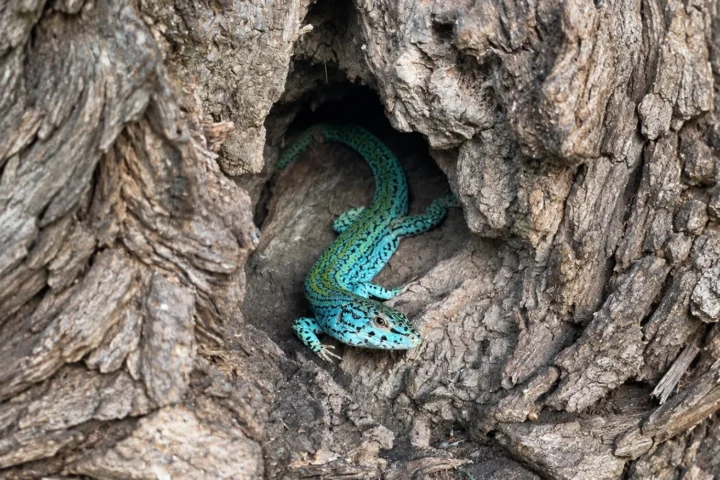


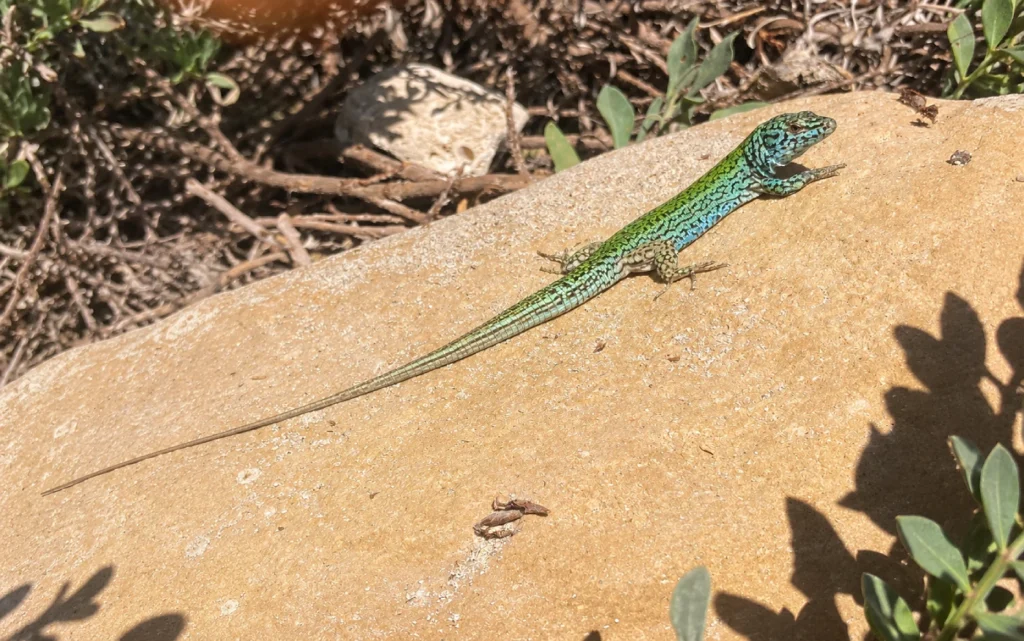
The Balearic Government has made public its plan for a network of up to eight official refuges for the Ibiza wall lizard (Podarcis pityusensis), where the species can live out of reach of invasive snakes. The first is already in use: a snake-proof enclosure at the Can Marines vocational training centre in Santa Eulària, home since October to 44 lizards from the south-west of the island: 24 females, 16 males and four whose sex could not be determined.
Animals could be moved between refuges to keep the populations healthy, and some refuges may also be used for environmental education and research.
Built to keep snakes out
The design, drawn up with advice from Barcelona Zoo, includes native plants, fruit trees and flowers for pollinators, water points, camera surveillance, a weather station and snake traps. Every lizard was photographed so it can be identified individually, and samples were taken for genetic analysis. The move took place only once all the permits were in place, including registration as a zoological facility.

A second refuge at Can Marines is already built and only needs its vegetation; it is expected to open in the coming weeks. Another, on private land, is being arranged through an agreement with a private organisation and should join the network before the end of the year, managed by the Balearic environment department.
Why a private refuge was fined
Officials also explained the case of the resident facing a €6,000 fine for keeping lizards in a private enclosure. According to the Government’s species protection service, the proposed sanction is for not having the prior authorisation required by Spain’s natural heritage law, not for the quality of the refuge or its owner’s intentions.
Traps, zoos and a tougher status
Snake trapping continues through COFIB, the Balearic wildlife recovery centre, which has caught more than 20,000 snakes in recent years. Lizards are also being protected away from the island: Barcelona Zoo received 33 from six islets in 2026, about 30 more are due to follow, and agreements are being prepared with other Spanish zoos and aquariums, including Bioparc Valencia.
The Government has asked the Spanish authorities to move the lizard from “vulnerable” to “endangered” on the national list, which would replace its conservation plan with a recovery plan. It also plans to start the process to list it as endangered in the Balearic catalogue this month.