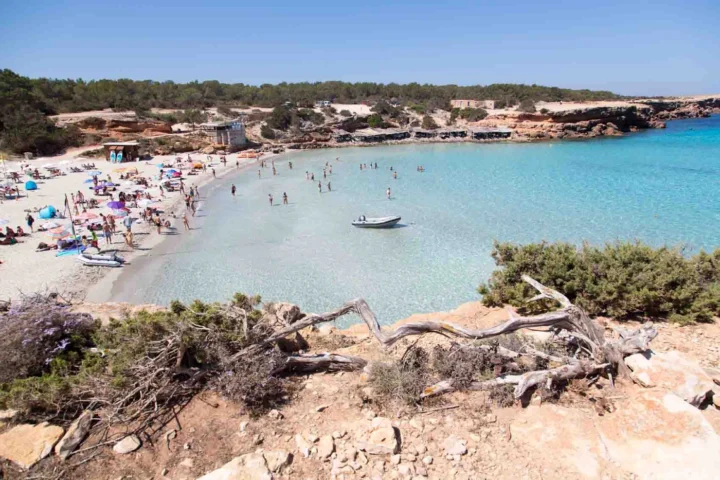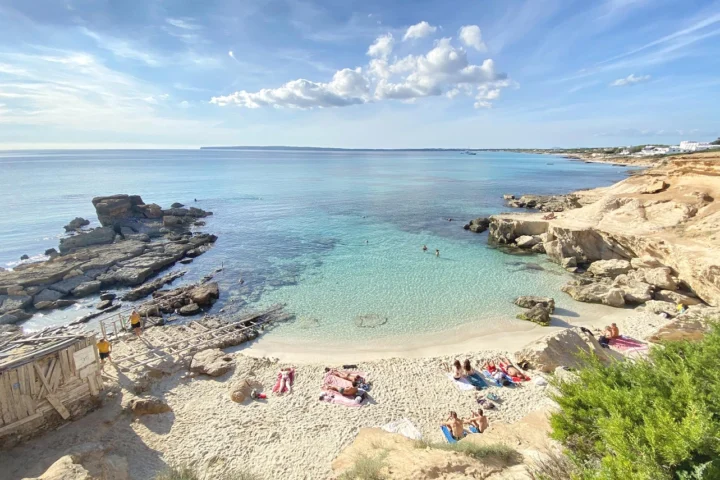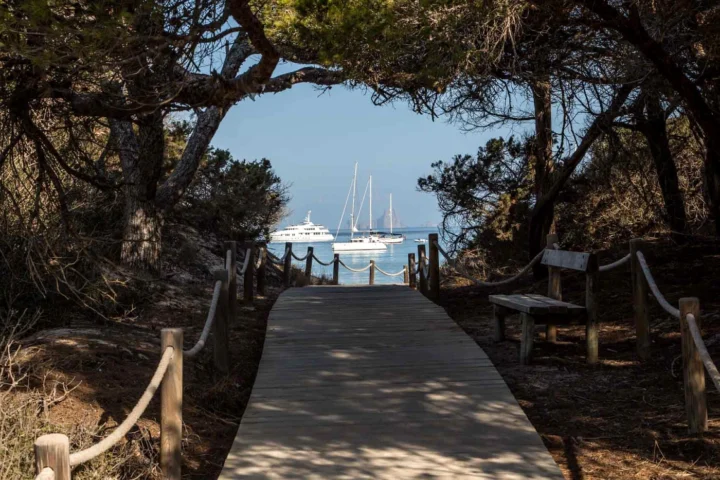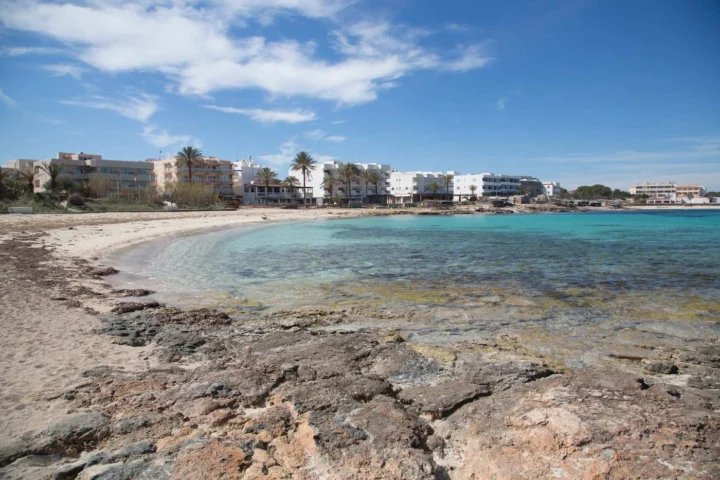


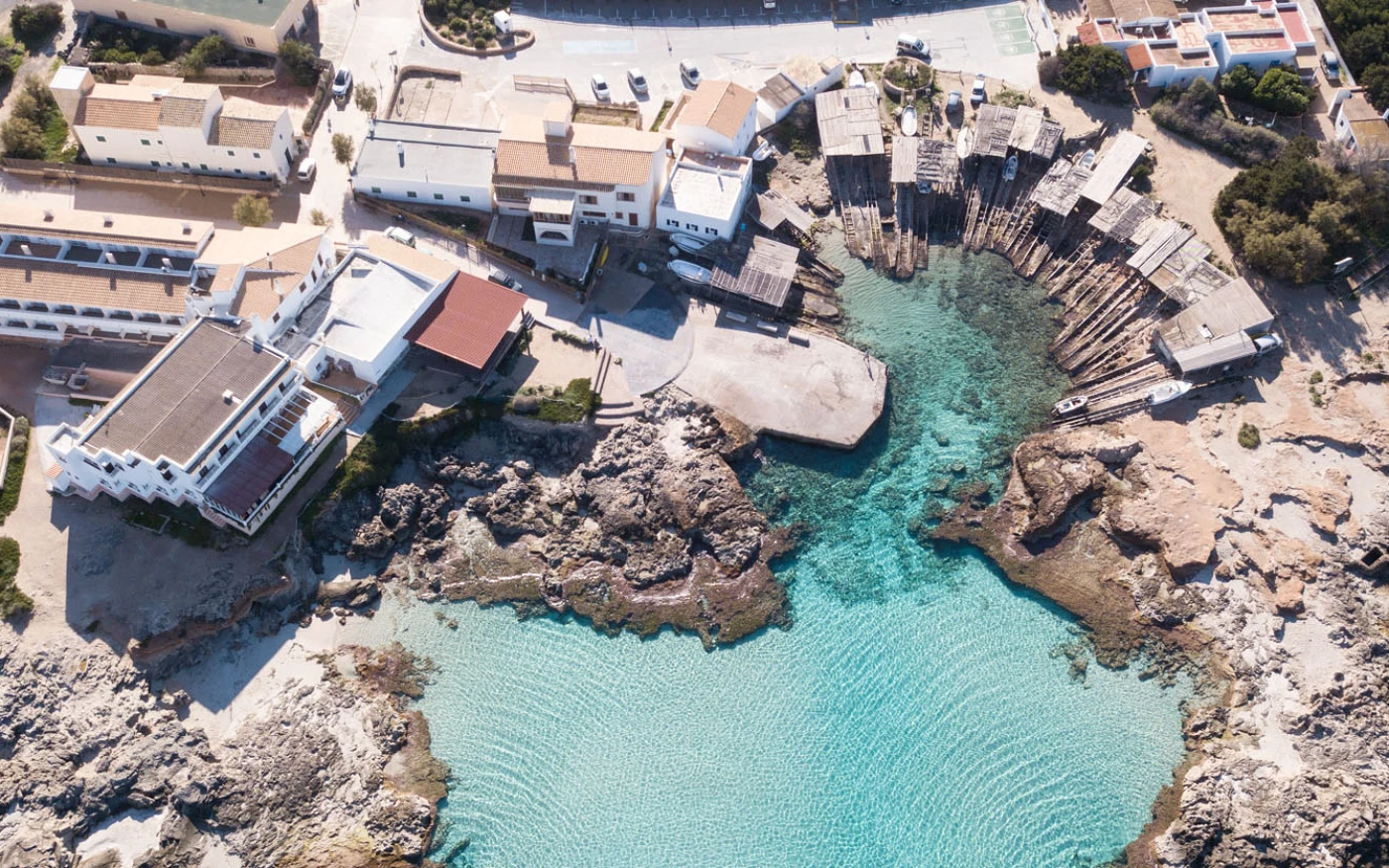
Es Caló de Sant Agustí, or simply Es Caló, is a small fishing village where most people still have a strong connection with the sea. Life revolves around its jetty and the old wooden boathouses of the fishermen.
A little history
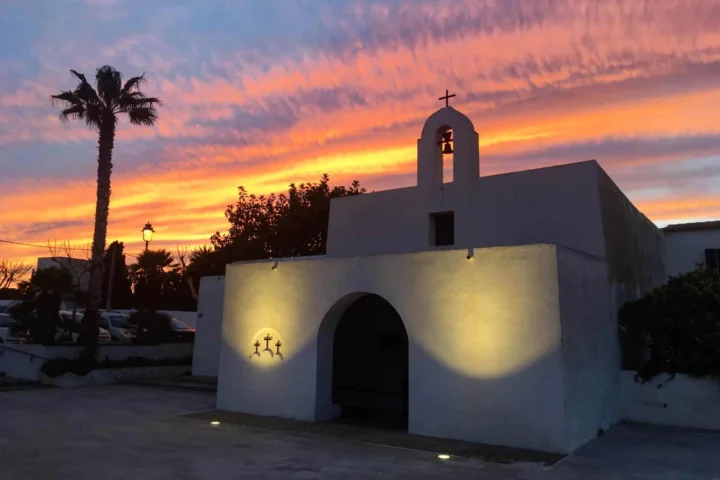
In medieval times, the Augustinian monks of La Mola used the small natural harbour between the rocks to sail to Ibiza and receive supplies, which is why the village is linked to Saint Augustine, the patron of their order. Es Caló has no church.
What to see and do
In summer you can still see fish drying on the fishermen’s huts: peix sec, usually ray cut into strips and dried in the sun and the breeze, is an essential ingredient of the island’s farmer’s salad, the ensalada payesa.
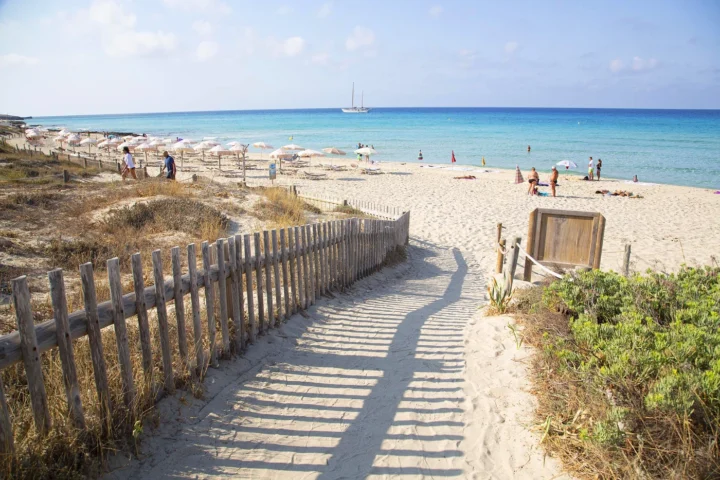
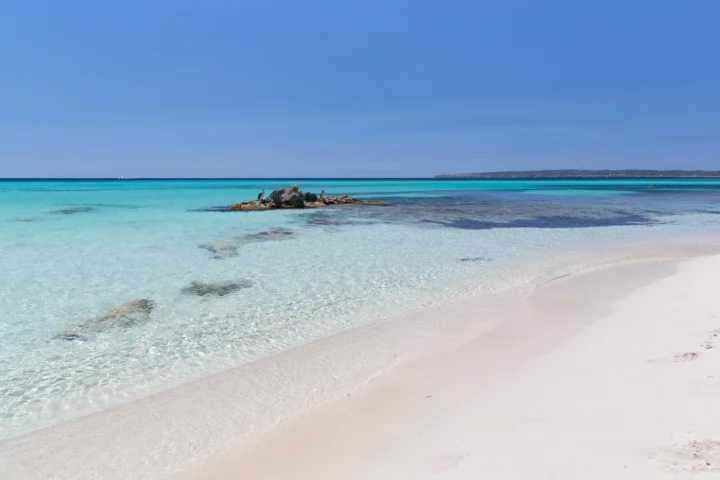
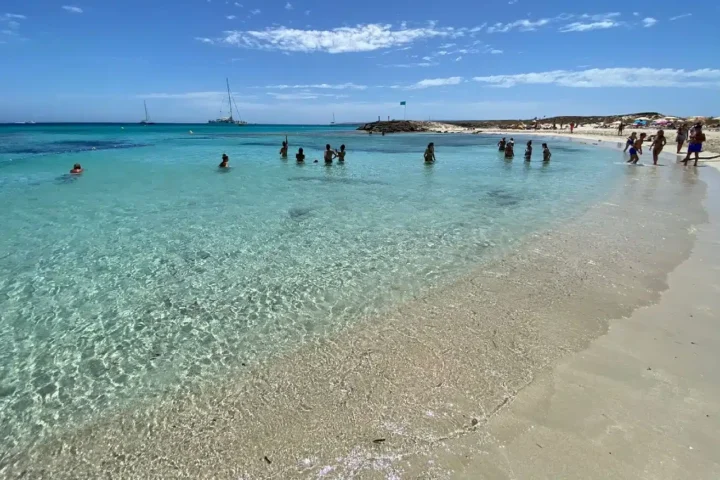
The whole coast on either side of the village is good for swimming, with stretches of sand and rock. The nearest beach, Ses Platgetes, is about 200 metres away. Es Caló also sits at the narrowest point of Formentera, less than two kilometres from the beaches of the south: when the north wind brings waves, head to Migjorn instead.
In the summer of 2019, eleven swords were found buried in the sandy seabed off the village and taken to the Archaeological Museum of Ibiza and Formentera. One theory, still unconfirmed, links them to 19th-century French cavalry, which could point to a wreck buried near the coast.
Festivals
The village celebrates Saint Augustine at the end of August. The festival was started by the residents in 2007, and since 2018 it has focused on the island’s traditions and culture.
Getting there
Es Caló is at kilometre 12 of the main PM-820 road, heading south from La Savina towards La Mola. Park only in the marked areas.
Good to know
Es Caló has one of the four pharmacies on the island, and the only one open all year. Bars, restaurants and shops are few, and many close at the end of the season.